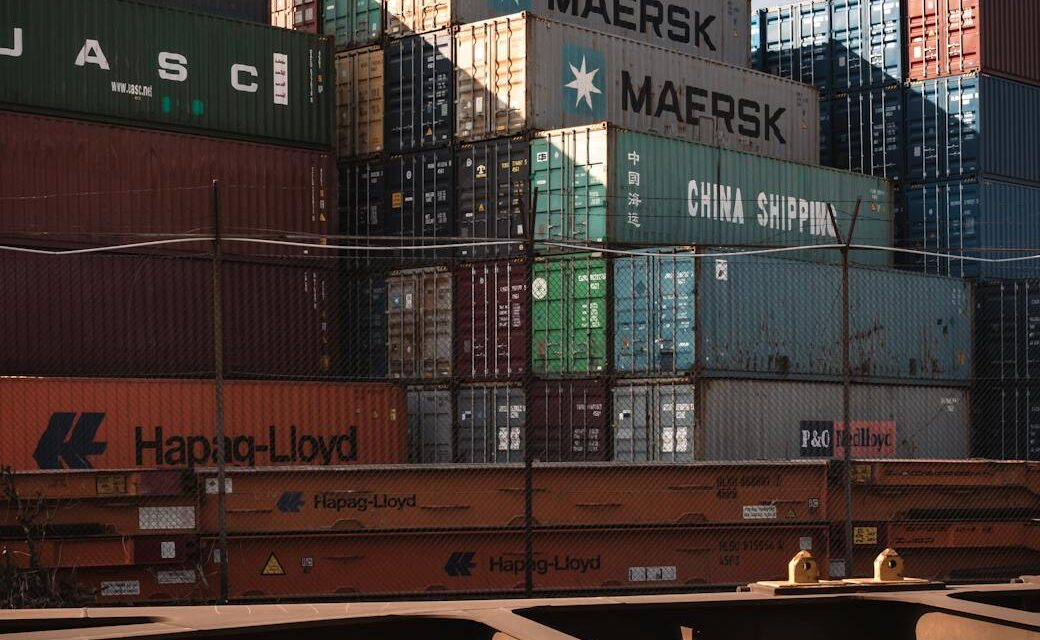
The price shock from ending duty‑free imports is only the headline; the deeper choke point is the shrinking throughput of customs entry, broker bandwidth, and compliance engineering.
Why the “cheap imports get pricier” story is incomplete
When the United States eliminated the de‑minimis exemption for shipments from China and Hong Kong on May 2 2025, the most obvious effect was a sudden increase in landed cost for low‑value parcels. The DigitBridge playbook notes that “hundreds of millions of small, direct‑to‑consumer shipments … lose duty‑free access” overnight, forcing sellers to absorb or pass on tariffs — see the post‑de‑minimis playbook.
But price is only half the equation. The same policy shift also forces every parcel into a formal customs entry, a step that was previously bypassed for most low‑value goods. TECE X’s analysis highlights that “formal customs entry will likely … create new processing queues” — see the de‑minimis rule removal impact.
Compounding the price pressure, the broader macro environment is already tightening. As Kindalame’s “Inflation Lie” explains, 2026 sees a “three‑way pressure cycle” of tariffs, oil risk, and a weak jobs market that is squeezing household budgets even before consumers notice the added import fees — see the inflation lie. Sellers who focus solely on price adjustments risk overlooking the operational shockwave that follows the de‑minimis sunset.
The hidden choke point: customs‑entry throughput
Customs agencies worldwide have been gearing up for a surge in formal entries, yet the capacity gap is widening faster than any technology rollout. The World Customs Organization’s “E‑commerce at a turning point” article warns that “most countries applied a de‑minimis regime … that eliminated the traditional complexity and expense of cross‑border commerce,” and that the abrupt removal “exposes a thin‑skinned entry infrastructure” — see the e‑commerce turning point.
McKinsey’s “De minimis disrupted” study quantifies the strain: customs revenue projections rise, but “the processing time per entry also climbs, especially where electronic filing systems are under‑resourced” — see the de‑minimis disrupted. The result is a queue that can add days to delivery windows, eroding the “fast‑shipping” promise that DTC brands market to consumers.
For smaller sellers, the bottleneck translates into higher cancellation rates and lower repeat‑purchase likelihood, long before the price hike becomes the dominant complaint. The operational lag is invisible to the end‑user until the promised delivery window is missed.
Brokers become the new gatekeepers
Customs brokers have traditionally acted as translators between importers and customs officials, but the post‑de‑minimis landscape turns them into scarce resources. Carriyo’s blog on the “De‑Minimis Dilemma” describes the previous “frictionless pathway” that “eliminated the traditional complexity and expense of cross‑border commerce.” With that pathway gone, “brokers now shoulder the bulk of entry filing, duty calculation, and compliance verification” — see the de‑minimis dilemma.
Because each broker can only process a finite number of entries per day, capacity constraints quickly become a competitive moat. Larger brands that have secured dedicated broker teams can maintain near‑real‑time clearance, while smaller operators scramble for limited slots, often paying premium fees for expedited service. The resulting cost asymmetry is not captured in headline tariff numbers but has a material impact on margins.
Compliance design is the emerging moat
Beyond broker bandwidth, the architecture of a seller’s compliance program now determines whether it can scale through the bottleneck. McKinsey emphasizes that “the complexity of duty‑exemption rules and the need for accurate HS‑code classification have risen dramatically,” urging firms to invest in automated classification engines and real‑time duty calculators — see the de‑minimis disrupted.
Those who treat compliance as an after‑thought face two risks: (1) delayed entries due to manual errors that trigger customs holds, and (2) penalties that can quickly erode profit margins. In contrast, brands that embed compliance into their order‑management system—integrating API‑driven broker workflows, automated HS‑code lookup, and dynamic duty‑rate feeds—create a self‑reinforcing moat that protects them from both price pressure and capacity scarcity.
The DigitBridge playbook also notes that “technology‑enabled compliance platforms are emerging as differentiators for cross‑border sellers,” reinforcing the notion that software investment is as strategic as inventory planning — see the post‑de‑minimis playbook.
What operators must do now
- Audit broker contracts – Identify the maximum entry volume each broker can guarantee and negotiate tiered pricing that rewards higher throughput.
- Invest in automated compliance – Deploy a classification engine that pulls HS‑code data from a trusted source and updates duty rates in real time; this reduces manual filing time by up to 40 % according to McKinsey’s case studies.
- Build a buffer in inventory – Anticipate longer customs cycles by holding regional stock in key markets, thereby preserving the “fast‑shipping” promise while customs entry catches up.
- Monitor customs performance metrics – Track average clearance time per entry and broker response latency; treat any upward trend as an early warning sign of capacity strain.
- Educate the consumer – Transparently communicate potential delivery extensions due to “customs processing” rather than “higher duties,” preserving brand trust while the operational reality shifts.
By treating customs entry, broker bandwidth, and compliance architecture as strategic levers—rather than peripheral cost centers—cross‑border DTC operators can turn the post‑de‑minimis shock into a sustainable competitive advantage. The price increase is inevitable; the ability to keep the supply chain flowing through an increasingly congested customs gate will separate the survivors from the casualties before the consumer even notices the difference.






Trackbacks/Pingbacks